

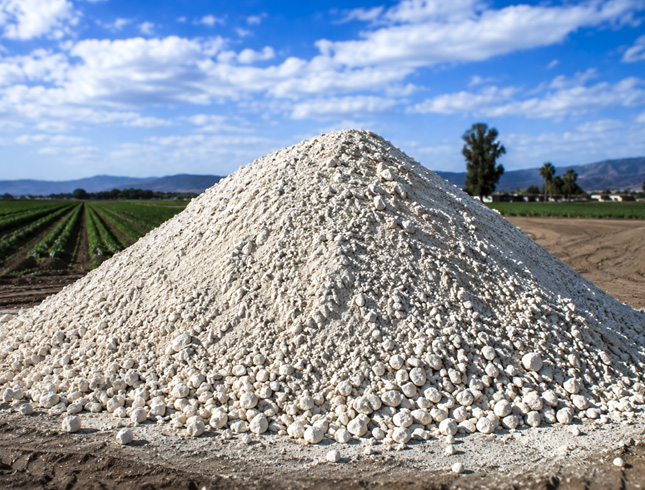
Limestone (calcium carbonate) is a natural, mined soil amendment commonly used to raise the pH of acidic soils. In acidic soils with pH below 6, important nutrients such as phosphorous, calcium and magnesium become less soluble and therefore less available for uptake by plants. Conversely, some nutrients become MORE available at lower pH, and can cause toxicity issues in plants and trees. These nutrients include iron, but also trace nutrients such as boron, copper, manganese and zinc.
Balancing Calcium And Magnesium
Balancing soils for optimum fertility requires managing the ratios between key nutrients. One of the most critical ratios is calcium to magnesium. Depending on the exchange capacity of the soil, the desired ratios of base cations is approximately 65% calcium and 15% magnesium. While magnesium is an important plant nutrient, excess levels of magnesium can monopolize multiple exchange sites on the soil particle, reducing the soil’s nutrient-holding capacity and impacting soil friability and drainage.
Depending on the results of your soil test, it may be appropriate to add Limestone (calcium carbonate) or Dolomite (calcium magnesium carbonate) to your soil.
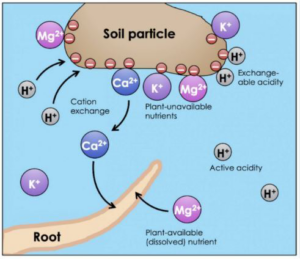 Limestone contains more calcium (approximately 30% total) than Gypsum (calcium sulfate). Limestone may be used either alone, or sometimes in conjunction with Gypsum, to increase calcium levels in the soil. The soil calcium level is important as a crop nutrient, for maintaining proper ratios between nutrients (especially magnesium), and improving soil structure.